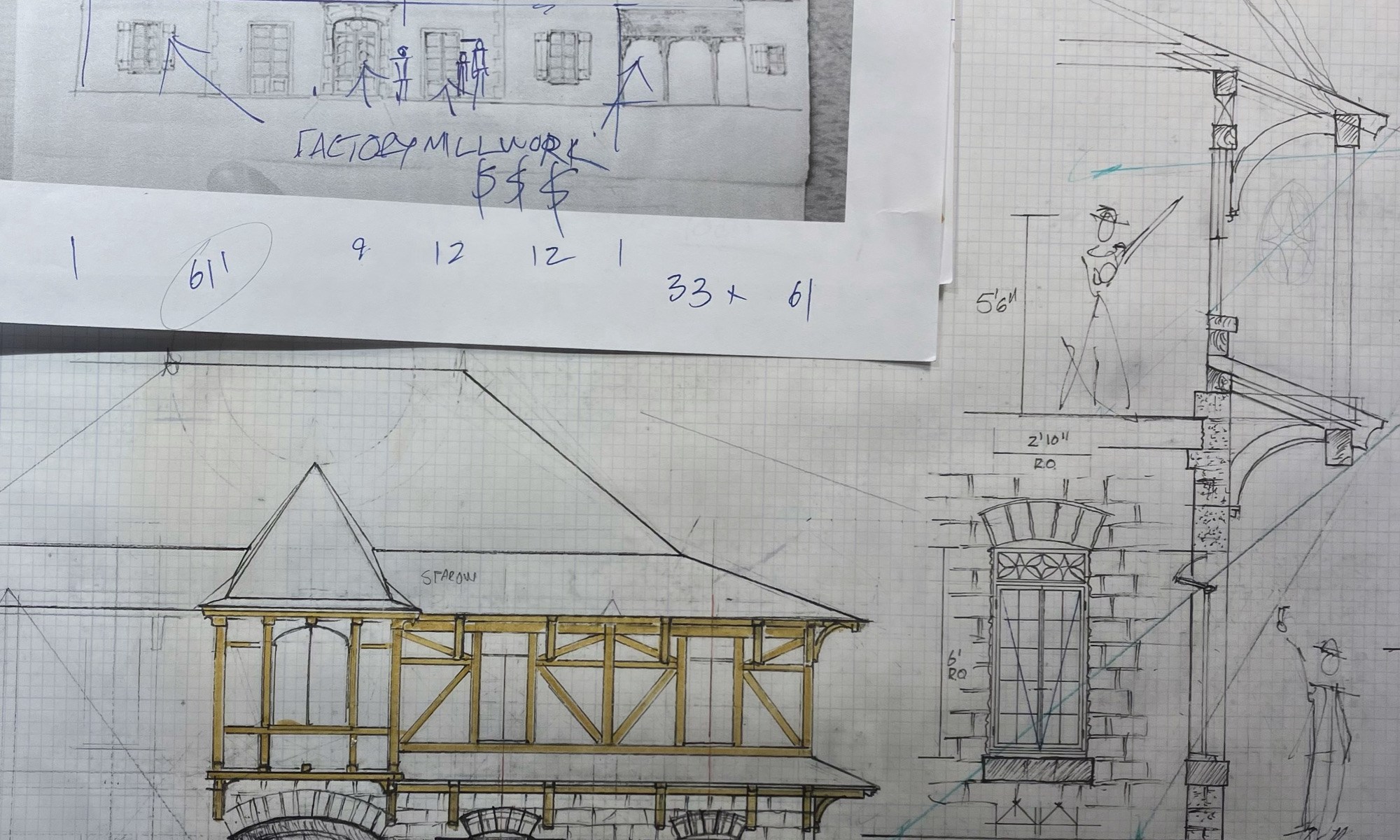
I came across a new type of guy. Crown molding factory owner, Brent Hull, who is doing some real “gee wiz” style commentary on traditional building. I’ve performed a critique on his design. Of course we’re using real stone, and timber frame right Brent? Why reinvent the wheel?
Brent’s design changes don’t offer much structurally. It’s still a suburb tract house sneering at the real thing. Brents design features a lot of consumption of millwork and products to produce “fashion”.
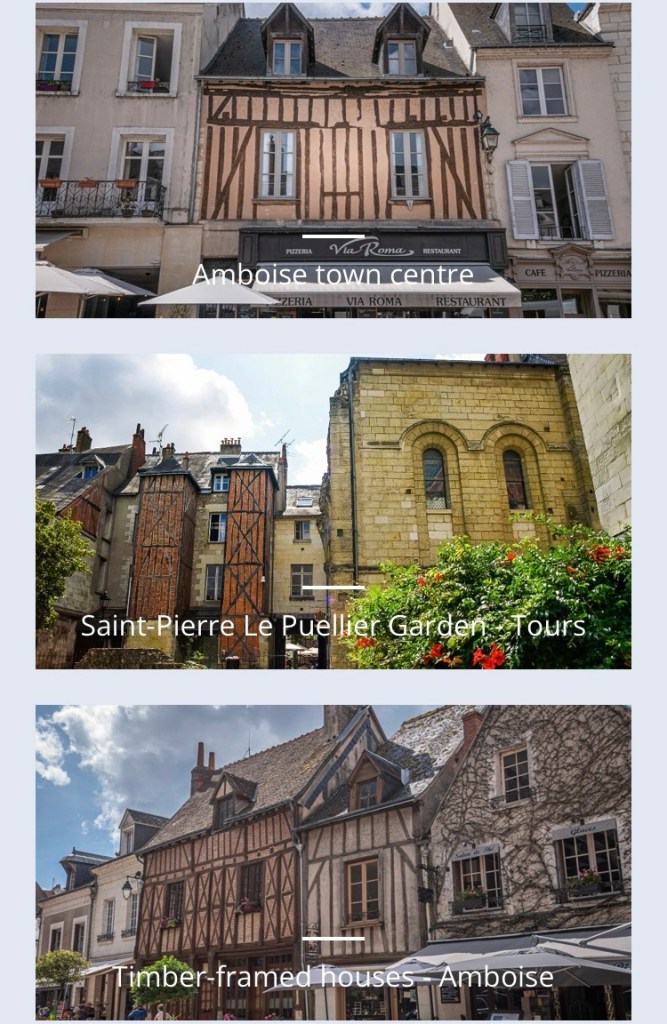
Rather than implying “French” with factory products stuck to a spec house…. Why not build French, and fitting the region.
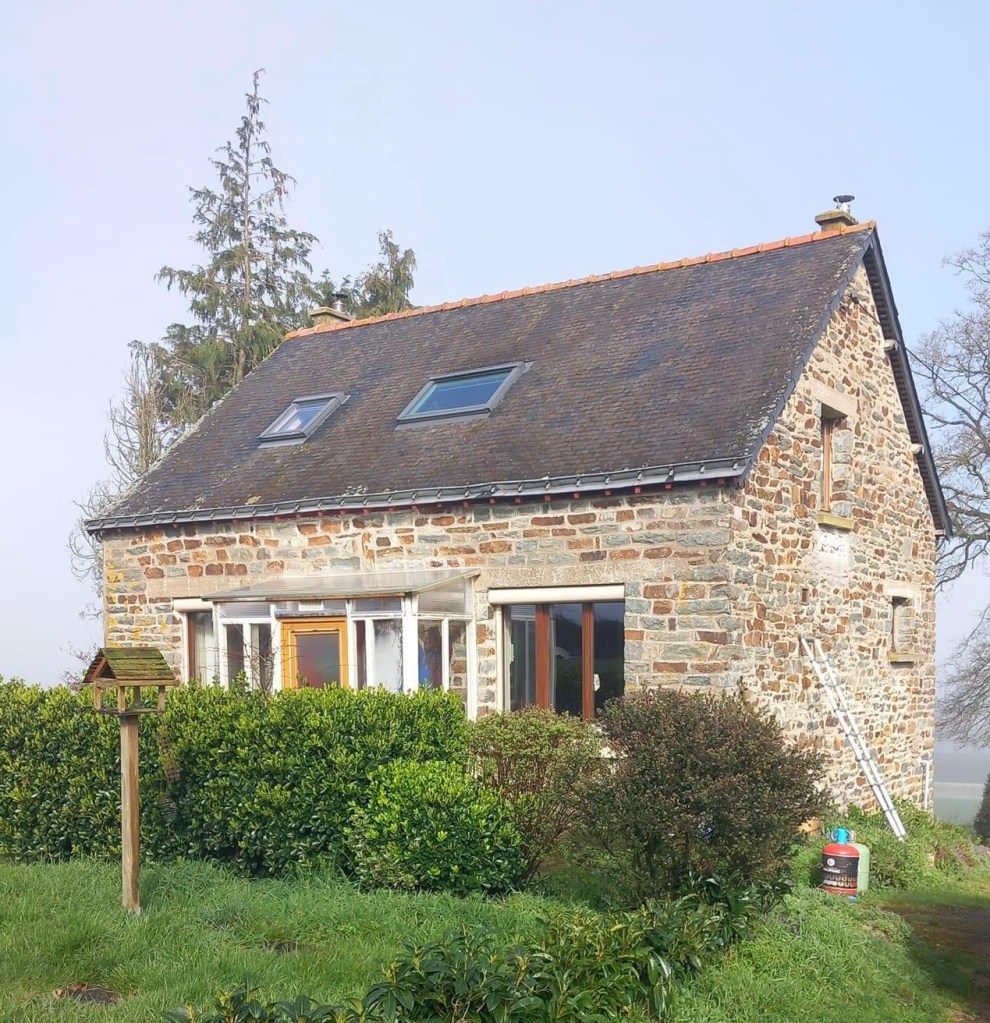
These building methods have worked for thousands of years. This style is also specific to the region. French, German, Dutch, and Spanish colonial era builders used this means and method exactly to make their structures in Texas.
Mass walls, a “big tent” roof, and excellent cross ventilation, keeps the interior cool in the blazing heat.

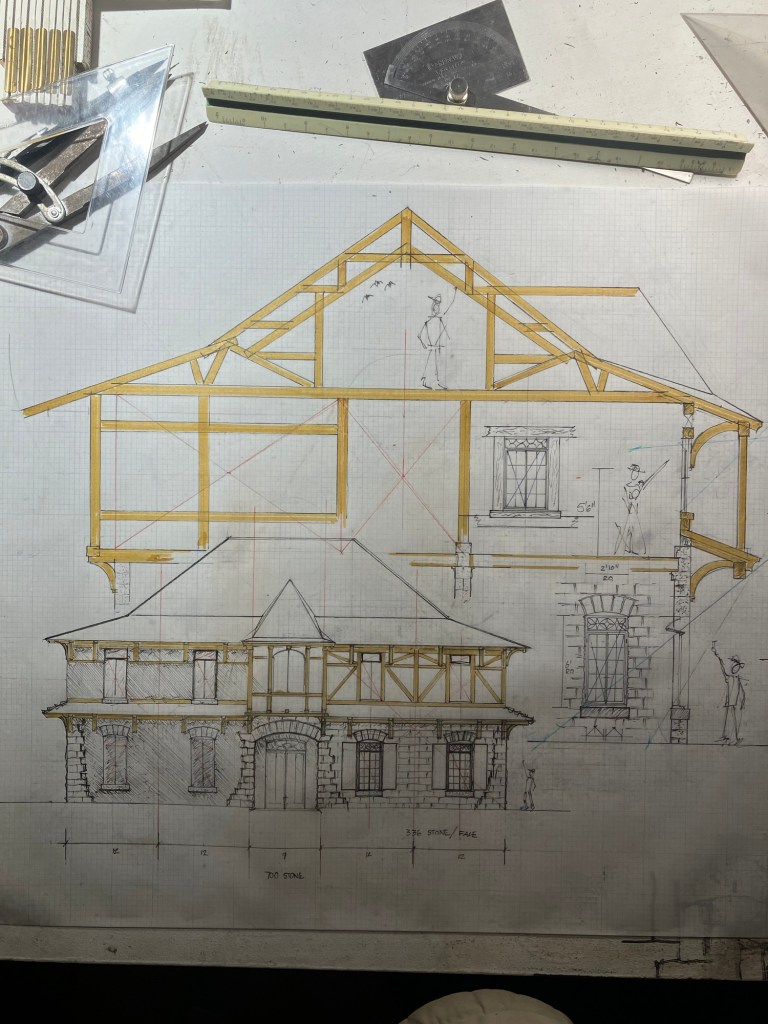
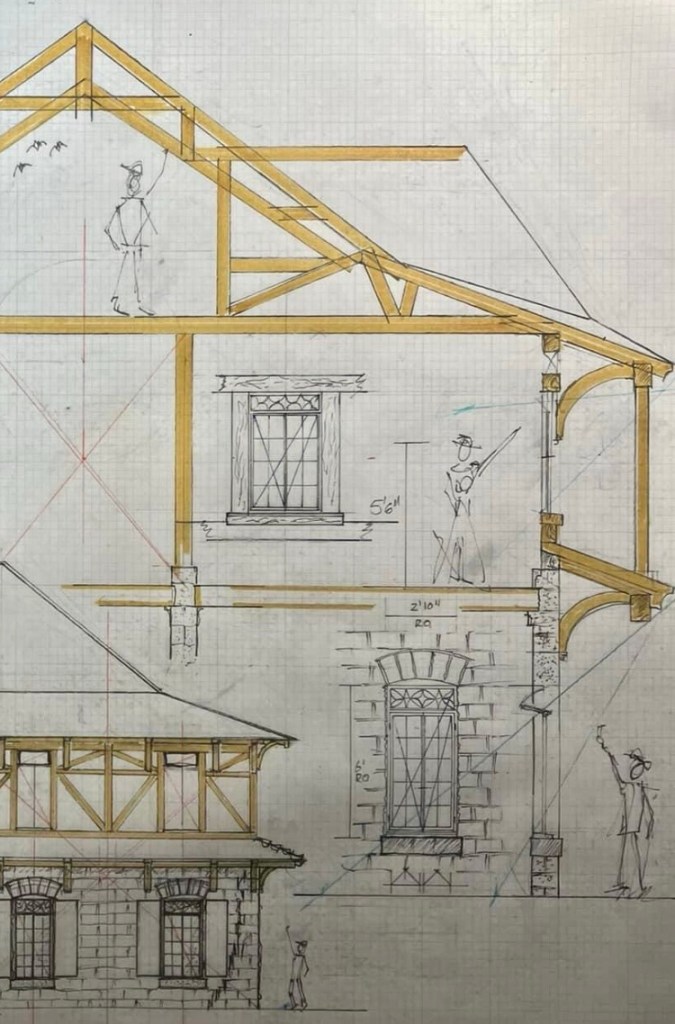
The changes here are: real materials for structure and sash. I didn’t change the “size” of the house just imagined it as a real one. Stone first floor, timber upper. Corbeled dormer over entry. The millwork entry is gone. Instead the structure of the stone wall and arch provides the punctuation.
What’s the point of the structure? 14 courses of 8”x12” stone. Thats the whole thing. Inside you plaster. On the exterior there is no need for appliqué or trim, the structure itself is beautiful. Instead of punching up the millwork and tack ons, everything we see here is doing a function. The arch stone set-back for the entryway gives it plenty of punctuation, and will convey importance and mass by simply being an impressive stone arch, in contrast to the spindly glazing of the French casement doors. It does what it says on the face.
Instead of the “extra” doors that go nowhere, we fit steel casements with leaded glass transom. The only “decorations” that are not serving function.
The second floor is post and beam structure with full joinery. Brick in-filled and stucco give the wall mass and provide backing for full plaster inside. We’ve avoided manufactured products for every thing but the glass and steel hardware for the steel sashes.




 Trad Building
You must be logged in to post a comment.